
(Sur)viving
Humanity Through the Lens
Selected artists: Islem Haouati, Bruno Hadjih, Brooke White, Hamid Aouragh.
A tribute is paid to the renowned South African photographer Pierre Crocquet, who passed away in 2013.
An exhibition exploring social ties, political conflicts, the struggle against the forces of nature, and humanity’s search for its place on this earth—not as an unwitting ruler, but in perfect symbiosis with nature. A difficult balance to strike.
TRIBUTE to Pierre Crocquet 1971–2013
In Pierre Crocquet’s work, people confront us and face material deprivation, exclusion, poverty, and misery; his photographs evoke empathy without pathos, as well as dignity and resilience. In post-apartheid South Africa, Pierre Crocquet gently reveals majestic portraits that reveal the subject’s social status; poverty is not an abstract inevitability—it is reflected in weathered, wrinkled faces, through everyday gestures, and in precarious living conditions. the depth of field is deliberate; words are superfluous; the photographer bears witness, magnifying simple lives in shades of gray and sometimes in black and white. We are exhibiting prints—artist’s proofs entrusted to the gallery in 2006 during his visit to Paris.
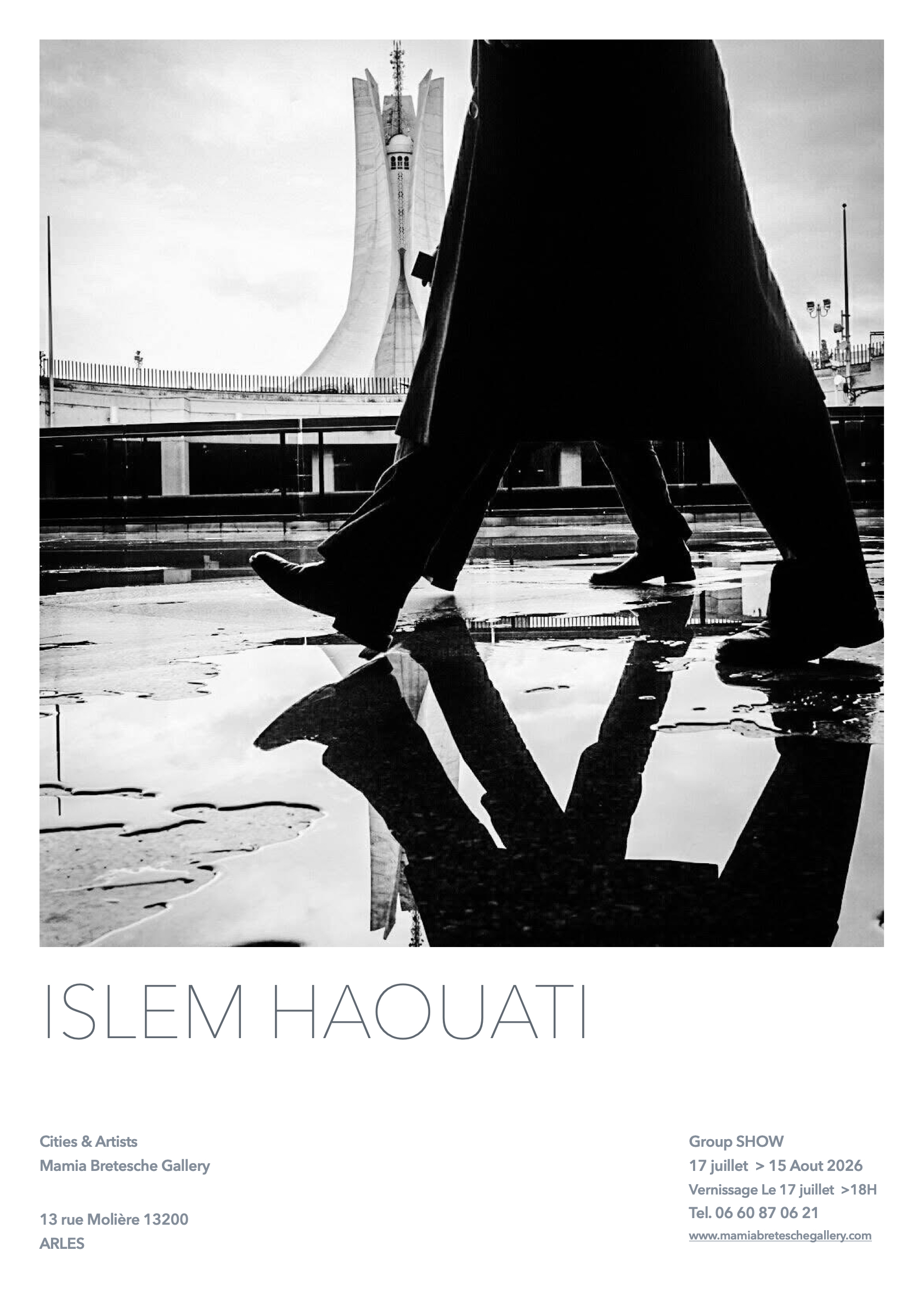
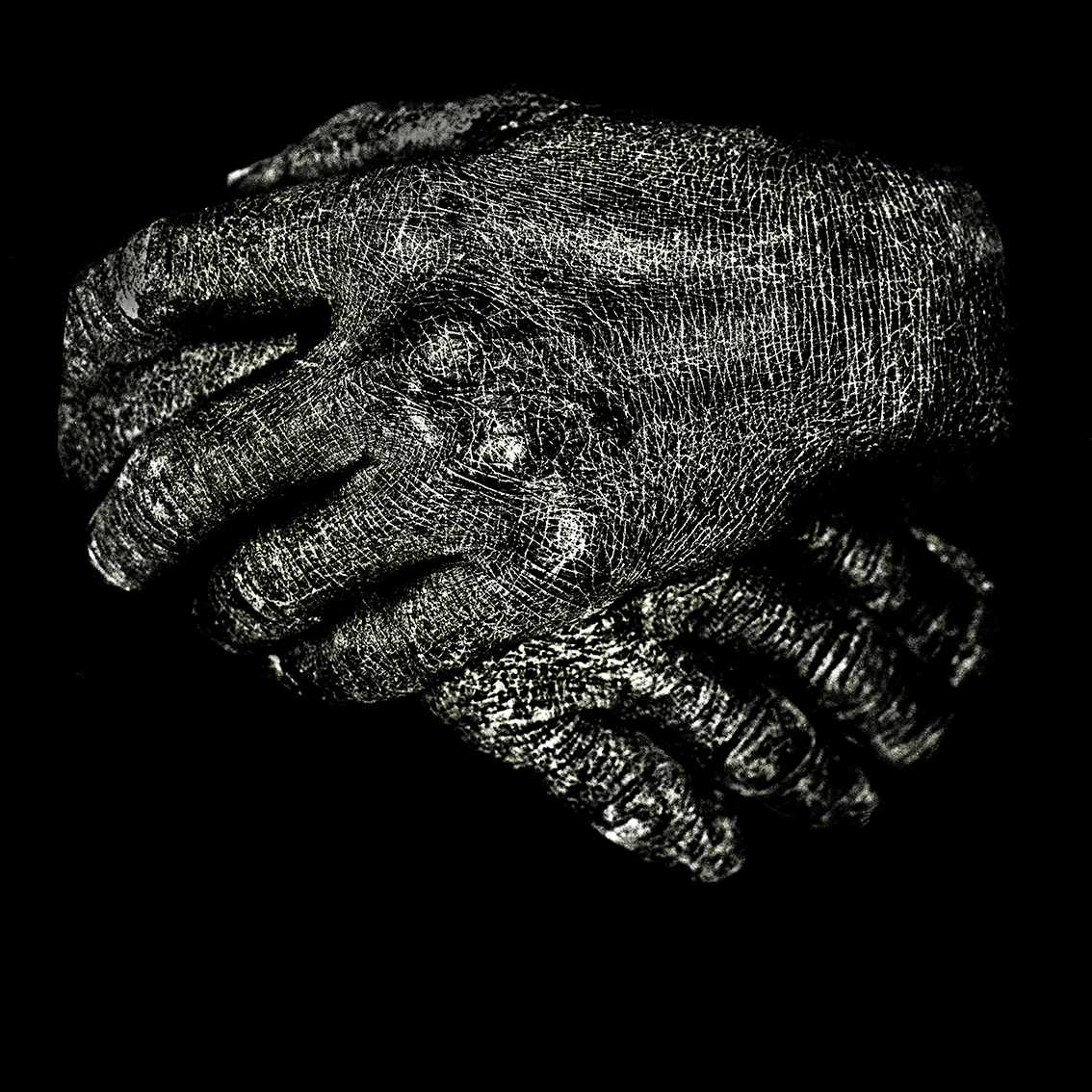
Islem Haouati has made the street a living, pulsating subject, day and night—whether it’s political demonstrations, social protests, or simply celebrations—he is there to capture what makes the heart of cities beat; his black-and-white photographs set the tone, the balance is fragile, social divides are palpable, and tensions are evident—but so too are street solidarity, migration, informal labor, and the inequalities that either isolate or bring people together. Islem’s photography has a social dimension set against a backdrop of human relationships, in an urban setting—sometimes industrial (2_People Walking, Algiers) Human survival in a hostile environment moves him—as do health crises (1_Photo: Figure whose face is covered with a long black cloth); his work captures confinement and tragedy, the breaking point of a carefree era. Humanity is fragile; this fragility is revealed during ecological crises (drought, conflicts, pollution, climate change) that directly affect the most vulnerable. Man walks a tightrope; will he be able to find the balance and reason to tame not nature but his age-old impulses—to have more, to go faster, farther, higher—until he loses his footing, until the point of rupture?
In Stephane Ellias’s work, carefree spirit and lightness prevail; his benevolent gaze upon those around him imbues his photographs with the radiance of images from happier days. These candid shots capture fleeting moments—the human spirit’s drive to soar, to feel light, to escape, in a sense, from its own nature, playing with “gravity” in every sense of the word. Her camera is her paradoxical ally; the technique freezes movement, leaps, balance, and imbalance in photographic prints—a duality that the artist subdues. It is his personal diary—a few photos of everyday life, of a dreamlike humanity, freshly awakened over a cup of coffee. It is 2003; the Internet has been born, and one of the most delightful “blogs” or “weblogs” is none other than Stéphane Ellias’s “journal infime”—“infime” on a virtual canvas. The fate of photography was about to undergo a revolution.
Archival photographs.
Selected artists: Islem Haouati, Bruno Hadjih, Brooke White, Hamid Aouragh, Stéphane Ellias (archival photos), Pierre Crocquet (Tribute: archival photos)
Languages spoken
-
French