
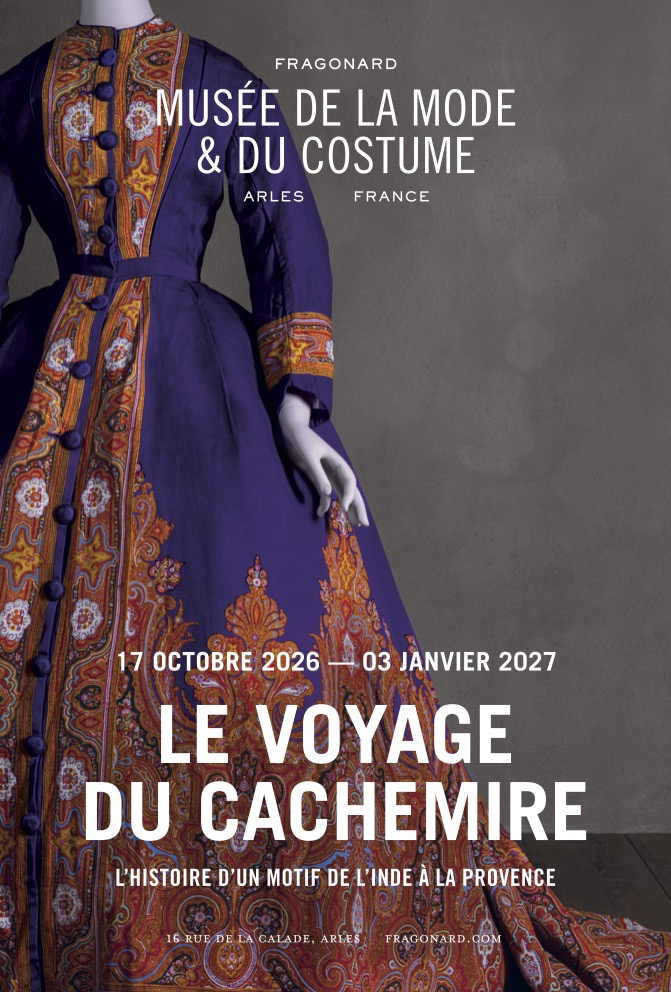
Recognizable by its distinctive shape, the “boteh” has its origins in the precious textiles of Kashmir. Cherished for centuries by sultans, shahs, and maharajas, this iconic motif from the East made its way to Europe, where it became a huge craze in the 19th century.
Shawls, fabrics, and garments adorned with these exotic patterns soon became staples in Western wardrobes. In response to their success, English and French manufacturers adopted and reinterpreted them: “paisley” in Great Britain, palmettes in France… The Kashmiri motif gradually took on a multitude of forms, colors, and techniques, eventually becoming widely popular in fashion.
Through unique pieces, remarkable acquisitions, and works from the Fragonard museums’ collections, the exhibition traces this evolution and highlights in particular the adoption of the paisley pattern in Provence.
Printed, embroidered, woven, and rendered as friezes, scattered patterns, or “all-over” motifs, the boteh found its way into Provençal clothing and costumes and gradually became a true hallmark of the region’s textile identity.
A stylistic and historical journey, from the mountains of northern India to Provence, to discover how a motif from the East has crossed centuries and borders to find a special place in Provençal wardrobes.