
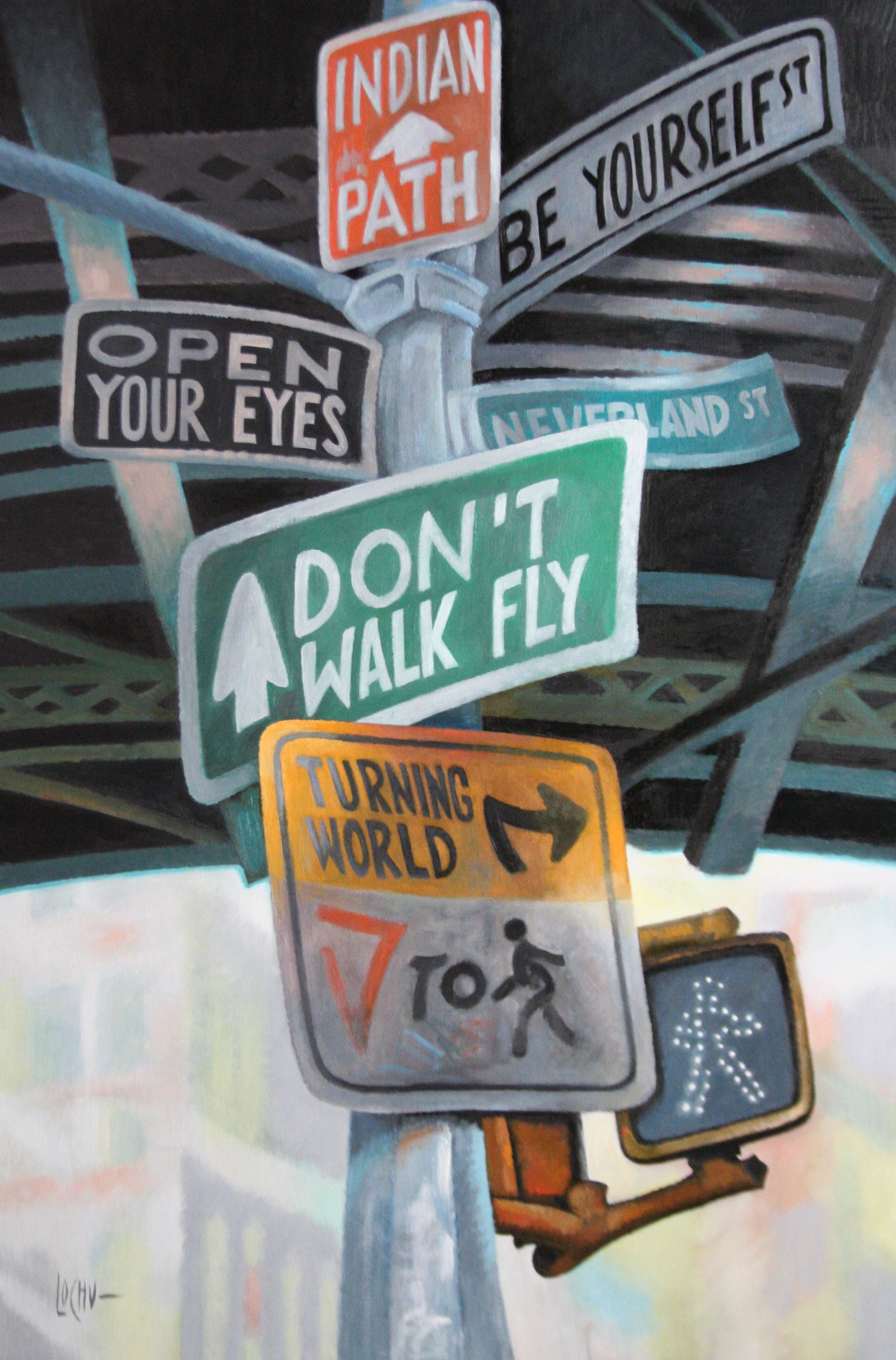
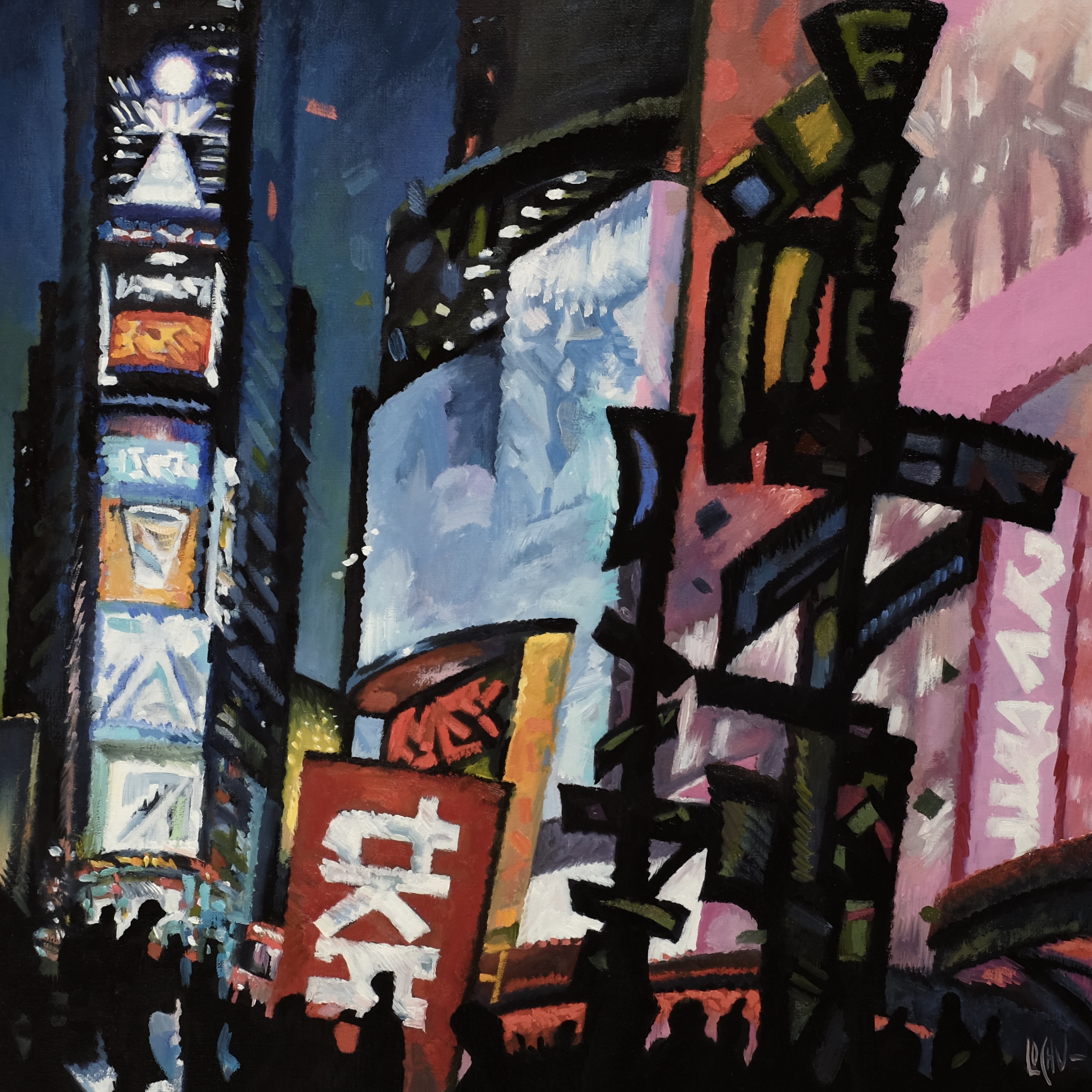
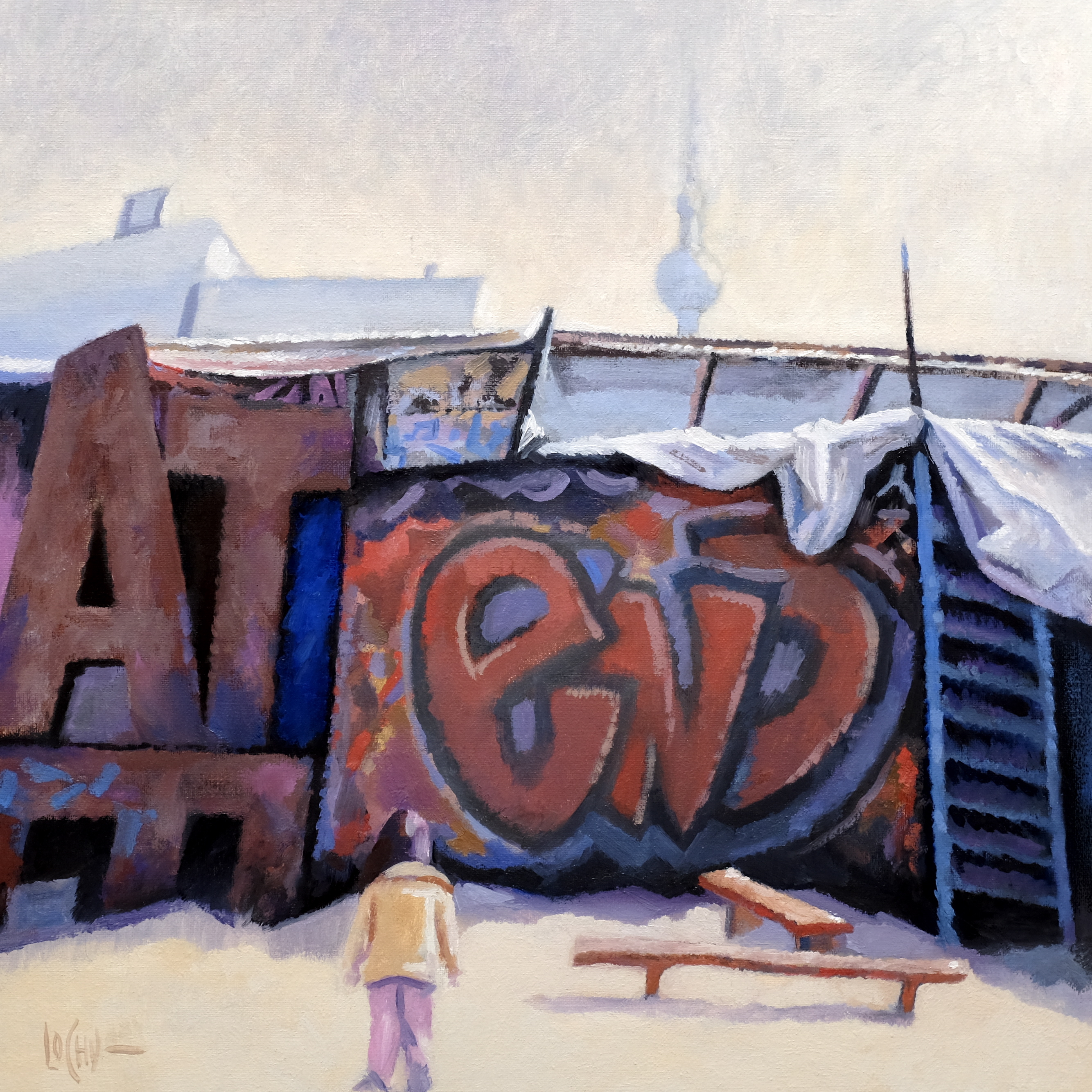
Claude-Max Lochu is a prolific painter with a boundless imagination. When I visited his studio, I was amazed to see hundreds of canvases stacked in tight rows. I don’t know them all, because a forty-year career is quite a journey! The ones on display at the Atelier du Refuge will give you a glimpse of his talent, and you’ll be left wanting to see more!
Pasqui R
CLAUDE-MAX LOCHU—A painter originally from Franche-Comté, born in Delle in 1951. He graduated from the Besançon School of Fine Arts (Jean Ricardon’s studio) in 1975. His first solo exhibitions were held in Morocco, in Rabat and Tangier. He set up a studio in Paris in 1979. He studied sumi-e (a Chinese ink painting technique) in Kyoto, Japan, with the artist Shiko Itoh in 1982. Starting in 1997, he made numerous trips back and forth to New York and Tuscany. He left Paris in 2000 to live in the Paris region, in Carrières-sur-Seine, following in the footsteps of the Impressionists, where he continued his major series on the poetry of everyday life. In 2019, he moved to Arles into a new studio and began weaving fiction into his urban landscapes.
The marriage of text and image weaves meaning between the poetics of public space and the poetics of his private world as a painter.
Words emerge from the page, from slogans, from signs, making their way into Claude-Max Lochu’s pictorial space.
We witness the marriage of text and image…. In Claude-Max Lochu’s extreme urban landscape, only words have a place.
The letter is there as a mark of humanity. “To look at a painting by Claude-Max Lochu is to treat oneself to a whirlwind journey into an imaginary world; it is to soar like Peter Pan above our lives, which are sometimes too down-to-earth. Claude-Max Lochu is an urban adventurer, a capture of urban moods, a magician of the atmosphere of places.”
Frédérique Paumier-Moch
“And even a landscape above the rooftops, with the wide-angle effect the painter imbues it with, in turn becomes imbued with that magic and intrinsic poetic sensibility that ultimately permeate the entire body of work by Claude-Max Lochu.”
André Liatard