
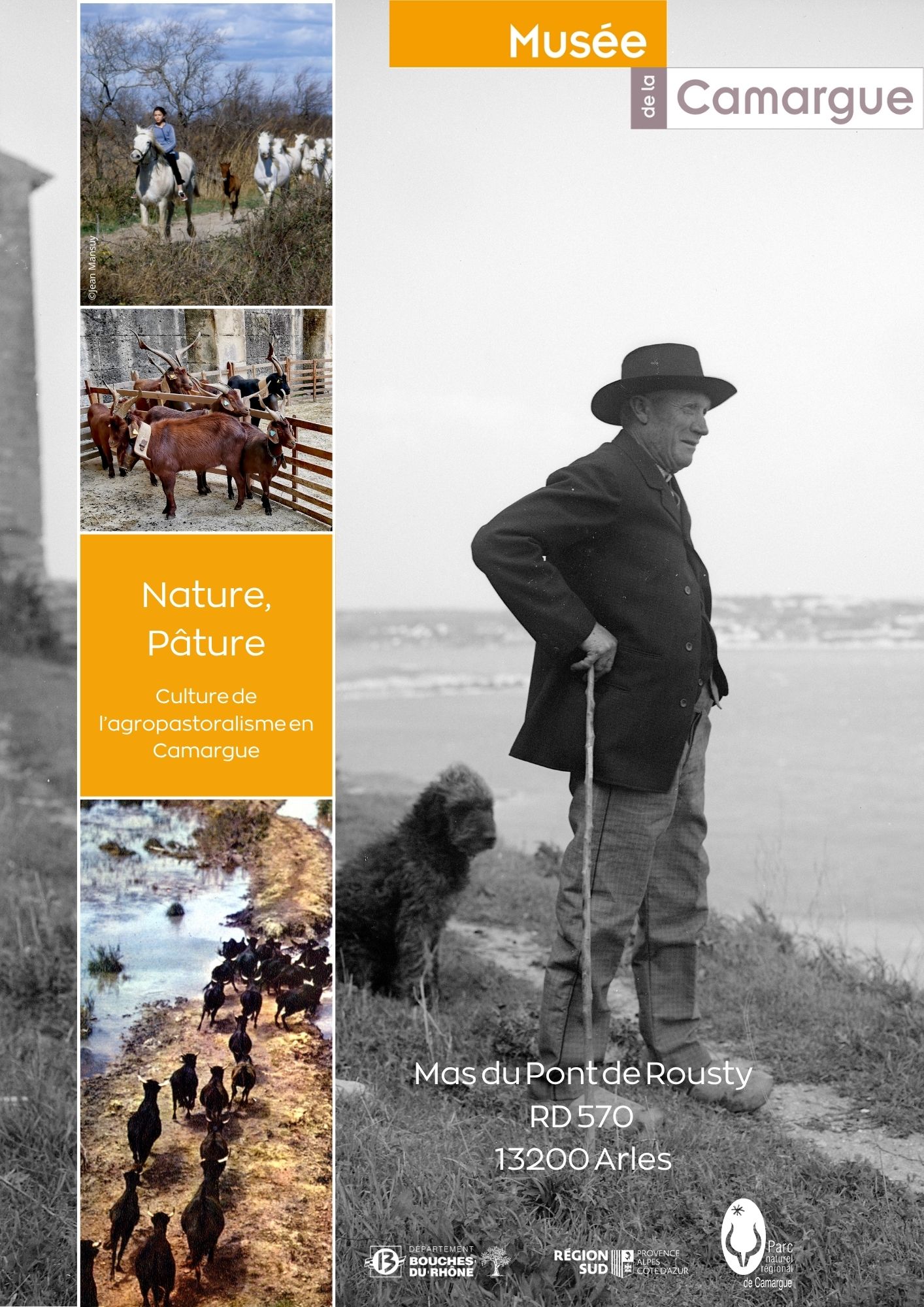
To mark this occasion, the Camargue Museum is presenting an exhibition that highlights the cultural landscapes and agro-pastoral practices of the Camargue, both past and present; it explores the role of this practice as an adaptive solution for the future in the face of climate change.
The Camargue—a land that appears wild and untamed by humans—is the result of a long process of human transformation. The Rhône Delta was formed over time by sediments deposited by the river into the sea. The soil there is naturally salty. Until the Rhône was fully channelized, floods naturally leached the soil and fertilized the land. Agriculture combined with livestock raising has been practiced there since ancient times. The movement of animals in search of food in the wild is replicated by livestock farmers, who, as the seasons change, seek out the pastures their herds need. This seasonal movement is called “transhumance,” derived from the Latin trans, meaning “across” or “beyond,” and humus, meaning “earth.”
In the Camargue, while the bulls and horses used for farm work graze on the low-lying, salty lands, the sheep graze on the cultivated fields after the harvests. Before summer, they leave the delta to “head for the mountains” to the alpine pastures, where they find rich grazing lands. Sheep provide numerous benefits: among other things, they fertilize the land they graze on and help maintain open habitats.


