
Built in the late 19th century by Gaston de Luppé, it is centered around the cult of Dionysus, whose monumental frescoes adorn the walls.
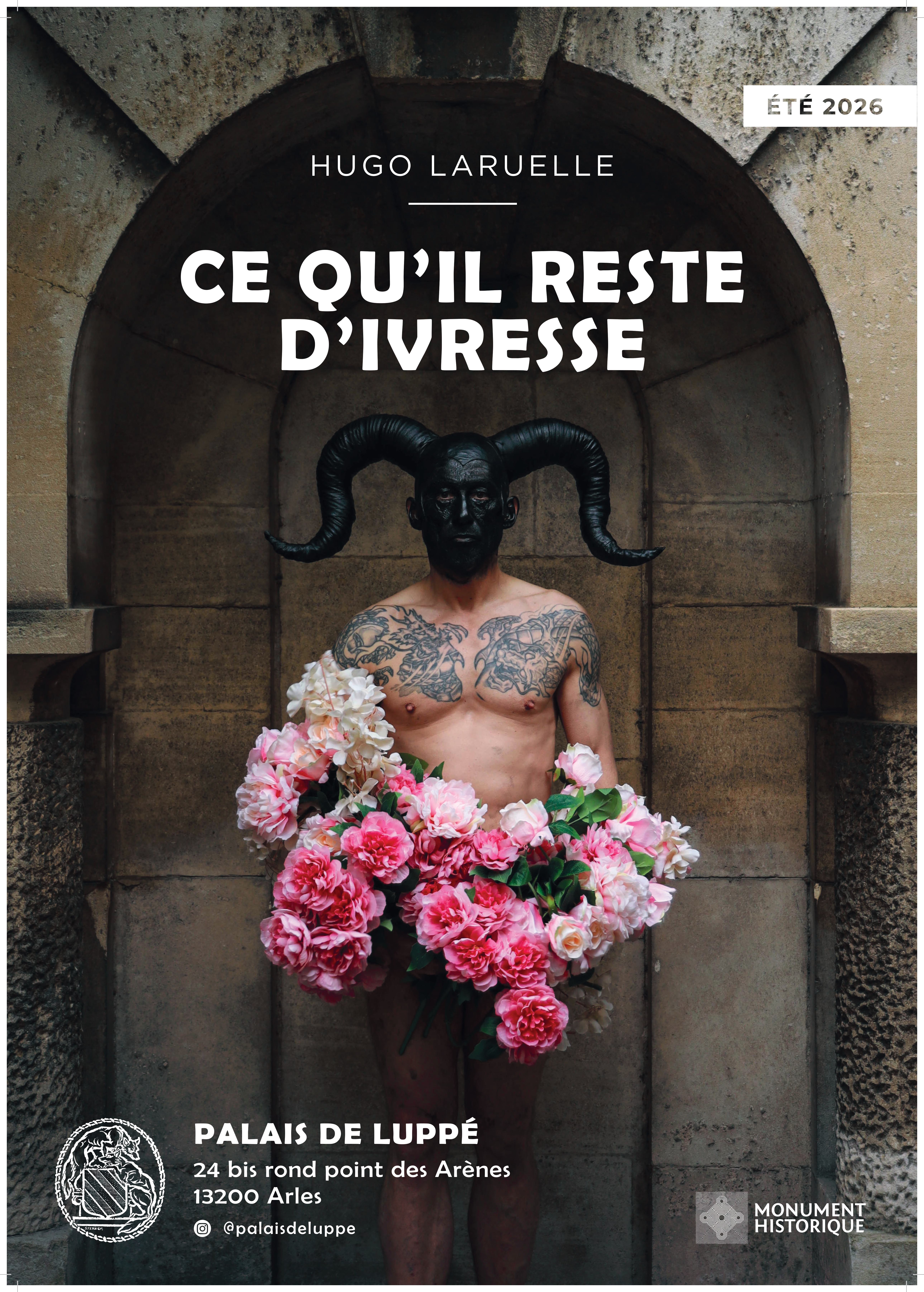
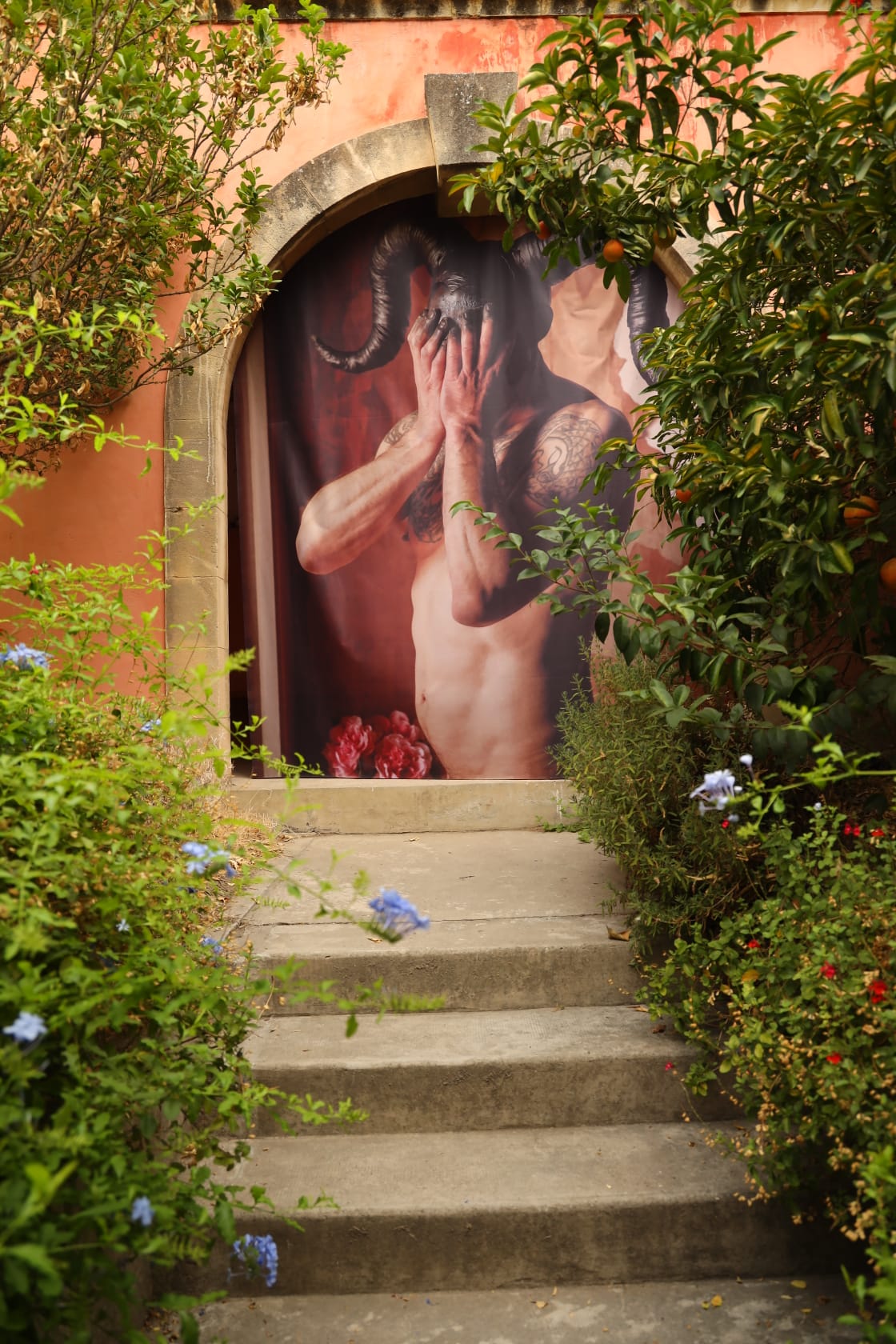
As an artist-in-residence, Hugo Laruelle uses his paintings and photographs to engage with the spaces of the Palace in dialogue with this heritage, extending certain unfinished decorations and offering a contemporary interpretation of the myth, attuned to this post-Bacchanalian melancholy. His project unfolds as a journey through exaltation, downfall, and memory.
The exhibition evokes the figures of Ariadne, the labyrinth, and the Minotaur, and extends the fresco created in the early 20th century by Jean-Amédée Gibert, winner of the Grand Prix de Rome.
This marks the creation of the first painted set designed for the residence in nearly a century. Conceived on-site by Roubaix-based artist Hugo Laruelle, this artistic project—open to the public—offers a particularly rare immersive experience: witnessing the creation of a monumental work within a historic monument still undergoing transformation.
Throughout this season, the Palais de Luppé is showcasing a program in which mythology serves as a tool for contemporary expression, as part of a dynamic approach to living heritage that embraces current artistic creation. It is an invitation to discover an unexpected place, where history continues to unfold before visitors’ eyes.